
The best countertop material is not always the hardest or most expensive one; it is the surface that fits the space’s use, cleaning routine, repair expectations, and tolerance for staining, scratching, heat, and moisture. Durability and maintenance burden must be weighed together.
TL;DR
- Compare surface materials by use case, not showroom appearance alone.
- Porous, jointed, or softer surfaces may need more sealing, cleaning control, or repair planning.
- Maintenance staff should review cleaning products, expected traffic, edge details, seams, and replacement access before final selection.
Durability is not one single trait
Countertop durability can mean resistance to scratching, heat, staining, impact, chemicals, moisture, or UV exposure. A surface may perform well in one category and poorly in another. For example, some natural stones are strong but may etch or stain if not cared for properly. The Natural Stone Institute provides technical resources for stone, while tile-related installations may rely on standards information from the Tile Council of North America. These sources do not replace manufacturer instructions, but they help owners ask better questions.
Maintenance burden changes by setting
A reception desk, school restroom counter, apartment kitchen, laboratory break room, and hotel vanity do not face the same risks. High-traffic settings often need surfaces that tolerate frequent cleaning and fast repairs. Residential settings may prioritize appearance and comfort, but maintenance still matters. For occupied properties, material replacement can affect users. The article Best practices for occupant communication before disruptive maintenance work is useful when countertop replacement disrupts kitchens, restrooms, or tenant areas.
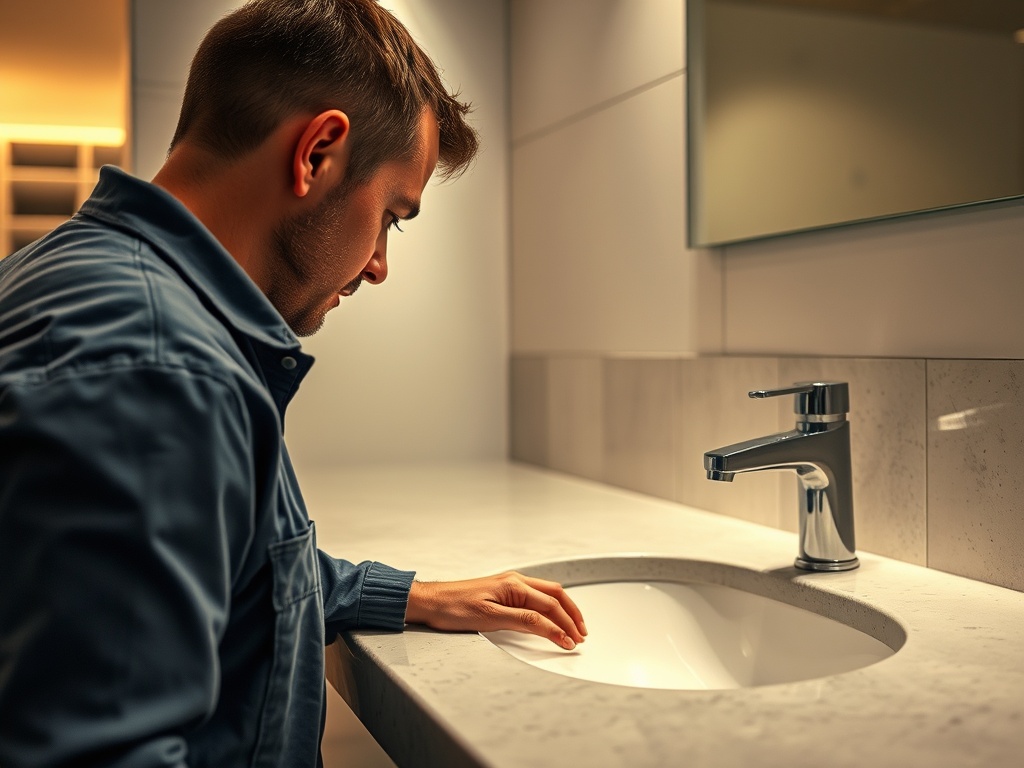
Comparing common surface categories
Engineered quartz is often chosen for low routine maintenance, though heat and manufacturer limits still matter. Natural stone can offer long service life, but sealing, etching risk, and cleaner compatibility vary by stone. Solid surface can be repairable, but may scratch more easily. Laminate is budget-friendly and replaceable, yet vulnerable to heat and edge moisture. Tile can be durable, but grout adds cleaning burden.
No material is maintenance-free. The practical question is which maintenance tasks the owner is ready to perform consistently.
| Surface Type | Common Strength | Maintenance Watchpoint |
|---|---|---|
| Engineered quartz | Low routine sealing needs | Heat limits and manufacturer cleaner rules |
| Natural stone | Distinct appearance and long service potential | Sealing, staining, and etching risk vary |
| Solid surface | Repairable in many settings | Scratching and heat sensitivity |
| Laminate | Cost-effective and easy to replace | Moisture at seams and heat damage |
| Tile | Durable surface options | Grout cleaning and joint maintenance |
Details that matter as much as the slab
Seams, sink cutouts, backsplashes, edge profiles, substrate support, moisture exposure, and cleaning chemicals can affect performance. A strong surface installed with weak detailing can still fail early.
Ask installers and manufacturers about compatible cleaners, heat limits, repair options, sealer schedules, warranty exclusions, and how future replacement would work without damaging adjacent finishes.
Questions to ask before approving samples
A sample can show color and texture, but it cannot reveal the full maintenance story. Ask how the material reacts to common cleaners, acidic spills, standing water, hot pans, impact at edges, UV exposure, and frequent wiping. In commercial settings, ask who will clean it, how often, and with what products.
Also ask about repair visibility. Some surfaces can be patched, sanded, or refinished more easily than others. A material that looks perfect on day one may become frustrating if small chips, seams, burns, or stains are difficult to repair without replacing a large section.
Installation details that affect long-term performance
Material choice and installation quality are inseparable. Unsupported overhangs, weak substrates, poor seam placement, tight clearances, water-prone joints, and incompatible sealants can shorten service life even when the surface itself is durable. Maintenance staff should review details that designers and installers may treat as minor.
Owners should also consider future access. If a counter traps plumbing, blocks valve access, or requires major demolition to replace a sink, maintenance burden rises. Good finish selection looks beyond the surface and considers the systems around it.
How lifecycle thinking changes the decision
Lifecycle thinking looks beyond purchase price. A lower-cost surface may be the right choice if it can be replaced quickly and affordably in a high-turnover area. A higher-cost surface may be justified where downtime, appearance, or cleaning demands make replacement disruptive. Neither answer is automatically better.
Owners should consider the cost of cleaning time, special products, periodic sealing, repairs, user complaints, downtime, and replacement complexity. A material with a higher installed cost may carry a lower maintenance burden in one setting and a higher burden in another.
It also helps to standardize. Using too many surface materials across a portfolio can complicate cleaning training and spare material storage. Standardization should not override design needs, but it can reduce mistakes in routine maintenance.
Cleaning compatibility deserves early review
Cleaning compatibility is often overlooked during finish selection. A surface may be durable under normal household use but vulnerable to disinfectants, acidic cleaners, abrasive pads, bleach exposure, or standing water. In commercial and institutional settings, cleaning products are often standardized, so the surface must fit the cleaning program rather than the other way around.
Before final approval, ask manufacturers for care instructions and compare them with the janitorial scope. If the approved cleaner cannot be used on the preferred material, the owner must choose between changing the surface, changing the cleaning product, or accepting higher maintenance risk. That decision should happen before installation.
Mockups and samples in real conditions
When the decision is important, test samples under realistic conditions. Place sample pieces near the actual lighting, try approved cleaners, review edge profiles, and compare finishes after fingerprints, water, or routine wiping. For commercial spaces, ask maintenance staff to review the sample, not only designers. The people responsible for cleaning and repair often notice practical issues that are easy to miss in a showroom.
When replacement planning matters
In busy buildings, the ability to replace a damaged surface can matter as much as the ability to prevent damage. Ask how long lead times may be, whether colors or patterns can be matched later, and whether replacement will disrupt plumbing, walls, flooring, or users. A beautiful material that is difficult to match or remove may create avoidable complications when a future repair is needed.
Maintenance input should come early
The maintenance team should have a voice before final approval, not after installation. Their input can reveal cleaner conflicts, repair concerns, access issues, and user habits that change how a material performs in the real building.
A selection lens for real buildings
Before choosing a surface, rank the risks in the actual space: heat, water, staining, cleaning frequency, abuse, downtime, and appearance expectations. Then choose the material whose weaknesses your team can realistically manage.
This article is for general education only. Construction contracts, code duties, warranty rights, engineering decisions, and maintenance programs should be reviewed with qualified professionals familiar with the project, jurisdiction, asset condition, and governing documents.