
Oil analysis can help owners spot contamination, wear patterns, lubricant breakdown, and maintenance issues before equipment problems become severe. It works best as a trend-based program, not as a one-time test.
TL;DR
- Oil analysis is most useful when samples are taken consistently and compared over time.
- Generators, pumps, gearboxes, compressors, and engines can benefit when the asset is critical enough to justify testing.
- A lab report should lead to a maintenance decision, not sit unread in a file.
What oil analysis can and cannot tell you
Oil analysis evaluates lubricant condition and signs of machine wear. Common tests may look at viscosity, metals, water, fuel dilution, oxidation, soot, additives, and particle counts depending on the asset and lab package. ASTM maintains petroleum and lubricant-related standards information through its petroleum standards resources. Owners should rely on qualified labs, equipment manufacturer guidance, and maintenance professionals to decide which tests are appropriate.
Why generators are a strong candidate
Standby generators may run only during testing or outages, which can hide developing issues. Oil analysis can support a broader preventive maintenance plan by showing whether oil condition, contamination, or wear indicators are changing between service events.
The value is highest for critical assets where failure affects safety, operations, revenue, or compliance. A small noncritical machine may not justify the same testing frequency as a generator serving emergency systems or essential business operations.
Sampling discipline matters more than a single number
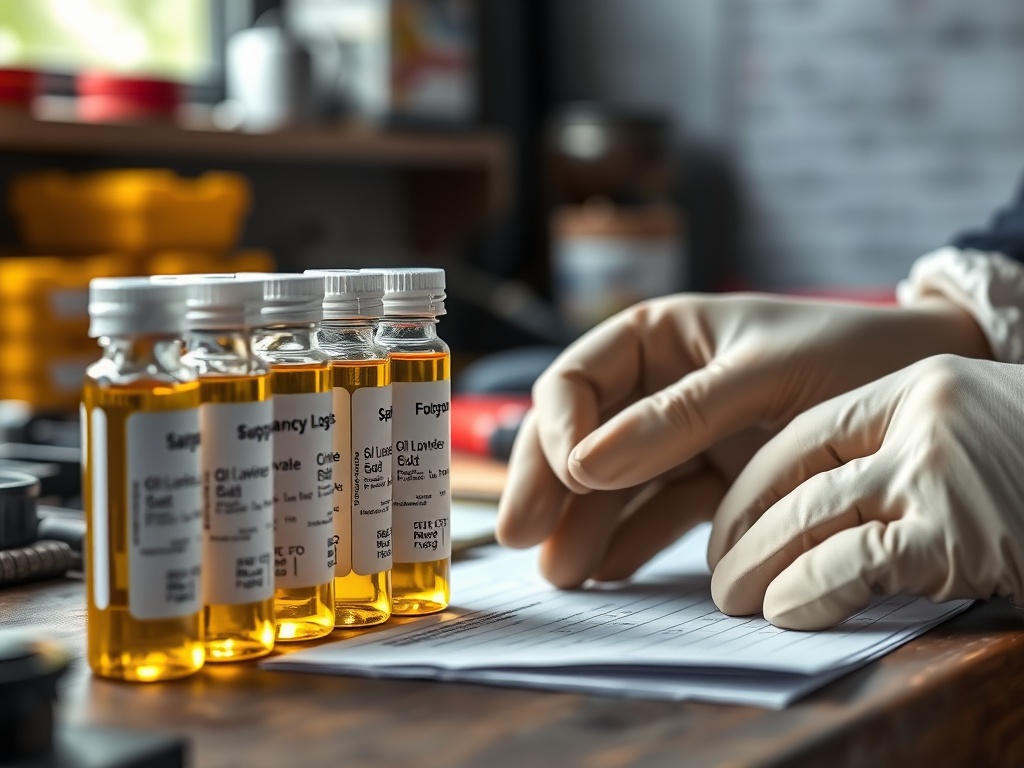
Poor sampling can make results misleading. Samples should be taken from a consistent point, at a consistent operating condition when possible, with clean bottles, proper labels, and clear asset identification. Random or contaminated samples reduce confidence. The related article Unit price vs lump sum contracts: which fits the project may help owners thinking about how to structure recurring maintenance or testing scopes in service contracts.
| Program Element | Good Practice | Risk if Ignored |
|---|---|---|
| Asset selection | Start with critical equipment | Testing low-value assets while missing high-risk ones |
| Sampling method | Use consistent points and clean containers | False alarms or missed issues |
| Trend review | Compare results over time | Overreacting to one result or missing patterns |
| Action plan | Define who reviews and responds | Reports pile up without maintenance value |
Turning reports into action
A lab report should be reviewed by someone who understands the asset, the lubricant, the duty cycle, and the maintenance history. A single abnormal result may call for resampling, inspection, filtration, oil change, or deeper diagnostics depending on severity and trend.
Trend charts are usually more useful than isolated readings. If metals climb steadily, viscosity drifts, or water appears repeatedly, the maintenance team can act before damage escalates.
Setting useful alert levels
Oil analysis becomes more valuable when the team agrees on response levels before the report arrives. A mild abnormality may lead to resampling. A repeated abnormality may trigger inspection. A severe result may require shutdown planning, filtration, oil change, or component testing. Those thresholds should be developed with the lab, equipment manufacturer guidance, and qualified maintenance professionals.
Context matters. A generator that runs under load every week may show a different pattern from one that rarely runs outside scheduled exercise. Fuel quality, environment, age, lubricant type, and duty cycle all affect interpretation. That is why trend history and asset notes are often as important as the lab values themselves.
Keeping the program from becoming shelfware
Many predictive maintenance efforts fail because reports are received but not acted on. Assign a person or role to review every report, record the decision, and connect findings to work orders. If no action is needed, document that too. The goal is a decision trail, not paperwork volume.
Over time, oil analysis can support broader reliability planning. It may help justify changes in service intervals, identify contamination sources, support root-cause analysis after failures, or prioritize capital replacement. Those benefits depend on consistent sampling and disciplined review rather than occasional testing.
When to combine oil analysis with other inspections
Oil analysis is stronger when paired with other maintenance evidence. Runtime hours, load-test results, coolant condition, vibration readings, infrared findings, fuel quality checks, and visual inspections can all change how a report is interpreted. A lab result should rarely be viewed in isolation.
For generators, the maintenance team should connect oil results to exercise logs and load conditions. Wet stacking, fuel dilution, moisture, or unusual wear indicators may require operational review, not only an oil change. The right response depends on the equipment and the pattern of results.
Owners should keep reports in the asset record rather than a separate email folder. When replacement planning or failure analysis is needed, the history is much more useful if it is tied to work orders, parts changes, inspections, and operating notes.
Building a clear sample history
A sample history should identify the asset, lubricant, hours, date, sampling point, operating condition, recent maintenance, and person collecting the sample. Those details help the lab and maintenance team interpret results. Without them, an abnormal reading may raise more questions than answers.
Consistency also supports defensible decisions. If samples are taken from different points at random intervals, trend comparisons become weaker. A simple written procedure can improve reliability: run the equipment as recommended, collect from the same point, use clean materials, label immediately, ship promptly, and attach the report to the asset record.
Training keeps the process consistent
A short training session can improve sample quality and report usefulness. Technicians should know where to sample, when to sample, how to avoid contamination, how to label bottles, and where results are stored. Supervisors should know how to read trend summaries and when to ask the lab or service provider for interpretation. Training turns oil analysis from a vendor service into a reliable maintenance habit.
What to do with normal results
Normal results still have value. They confirm baseline trends, support maintenance decisions, and help identify what “normal” looks like for that specific asset. Do not discard them because no action was required. Over several sampling cycles, normal reports create the comparison point that makes future abnormal results easier to interpret. In reliability work, the quiet data often becomes useful later.
Trend discipline supports better decisions
The program should keep the same lab where practical because test methods and reporting formats can vary. Consistency makes long-term trends easier to compare and helps maintenance teams notice gradual changes before they become urgent.
A practical sampling program starter
Build a small program first: choose critical assets, set sampling intervals, document the method, select a qualified lab, assign report review, and define response triggers. Expand only after the process proves useful.
This article is for general education only. Construction contracts, code duties, warranty rights, engineering decisions, and maintenance programs should be reviewed with qualified professionals familiar with the project, jurisdiction, asset condition, and governing documents.