Interior Design & Decor | How-To | Informational | Intermediate | Top of Funnel
A rental can feel personal without permanent renovation when you treat the existing shell as a backdrop and concentrate character in reversible layers. The most effective changes usually come from lighting, textiles, art, furniture placement, and a limited set of removable details rather than from filling every wall.
Personalizing well also means respecting the lease, the surfaces you inherited, and the time you expect to stay. A flexible plan should look intentional now and remain easy to remove or carry to the next home.
TL;DR
- Start with the lease and room measurements, then choose reversible changes with a clear removal plan.
- Build a recognizable palette through textiles, lighting, art, and repeated materials before adding more objects.
- Use furniture layout to improve function first; style feels stronger when the room works well.
- Test adhesives, finishes, and installation methods in inconspicuous areas and follow product instructions.
Read the room before buying decor
Take photos of each room in daylight and at night. Note the fixed elements you cannot easily change: flooring, cabinet color, tile, trim, window placement, ceiling fixtures, and major architectural lines. Instead of fighting every fixed finish, choose two or three colors and materials that either echo it or provide deliberate contrast.
Measure wall spans, window dimensions, furniture clearances, and the locations of outlets and switches. A simple floor sketch can prevent expensive trial and error. It also helps you see whether the room needs more objects or simply a better arrangement.
Before adding decorative storage, remove what already feels unnecessary. The approach in maintaining a clutter-free living room is especially relevant in rentals, where limited floor area can make small accumulations feel larger than they are.
Choose a portable design language
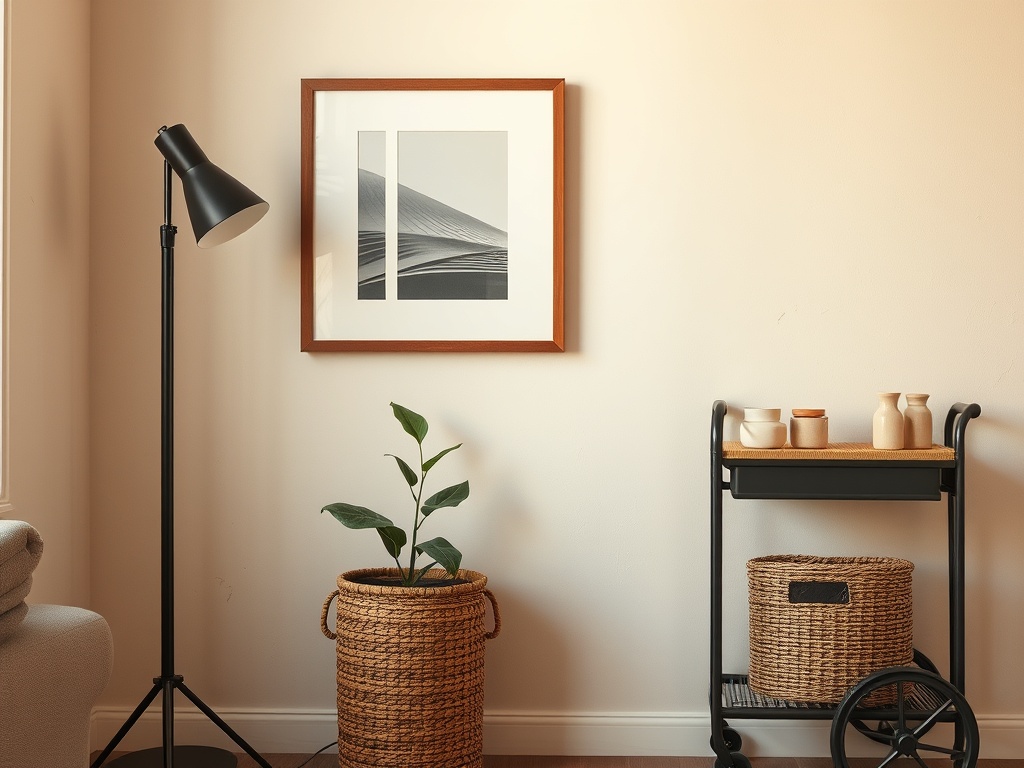
Pick one visual idea that can travel with you: warm woods and woven textures, black-and-white graphics with metal accents, muted earth tones, or a collection of framed prints. The exact style is subjective. What matters is repetition. A few related elements across the room create more identity than unrelated statement pieces.
Textiles are useful because they cover large areas without altering the building. Curtains, rugs, bedding, cushion covers, and throws can change perceived color temperature and softness. Measure carefully, keep heating equipment and vents unobstructed, and choose rug pads appropriate for the flooring type so the backing does not mark a finish.
For shelving or display areas, leave some negative space. Personal objects are easier to notice when they are not competing with many filler pieces. A small group of books, a ceramic object, and a framed photograph can communicate more about the resident than a shelf packed edge to edge.
Layer lighting instead of relying on one ceiling fixture
Overhead lighting often serves the room but does not define it. Add portable task and ambient sources such as floor lamps, table lamps, plug-in sconces, or rechargeable accent lights where appropriate. The aim is to create pools of light for reading, conversation, and evening use rather than one uniformly bright field.
Use compatible bulbs and stay within fixture ratings. Keep cords away from walking paths, and avoid improvised electrical connections. If an installation would require altering fixed wiring, consult the landlord and a qualified electrician rather than treating it as a decor project.
A repeated lamp shape, shade material, or light temperature can become part of the rental's visual identity. This is a design preference, not a universal rule, so adjust for color rendering, task needs, and personal comfort.
Add wall character with a removal plan
Artwork, mirrors, and textiles can shift a room quickly, but the correct mounting method depends on wall construction, object weight, and lease terms. Do not assume a removable adhesive is harmless on every painted surface. Read the manufacturer's surface and weight guidance, test first, and keep any packaging that explains removal.
If repainting is permitted, document the original condition and any restoration requirement. The U.S. Environmental Protection Agency advises attention to ventilation, paint emissions, and lead-safe practices in older housing during remodeling or painting work. For pre-1978 U.S. housing, disturbance of old painted surfaces deserves particular care because lead-based paint may be present.
Use functional pieces as part of the look
In a rental, the most valuable furniture often does more than one job. A bench can provide seating and concealed storage. A narrow console can define an entry and hold daily essentials. A freestanding bookcase can create vertical storage without built-in work, although tall furniture should be secured appropriately where tip-over risk exists. The CPSC's Anchor It guidance is a practical reference for homes with children or other tip-over concerns.
Mobile storage can also preserve flexibility. If a kitchen or bathroom lacks built-ins, a carefully sized cart can hold supplies and move out of the way. See the comparison of rolling carts for compact utility spaces before choosing one solely on appearance.
If a closet is the pressure point, work there before adding furniture to the main room. The method for organizing a linen closet for fast access shows how to use categories and shelf zones so overflow does not become decor by accident.
Create identity through what you actually use
A personalized home should reveal routines, not just a trend. Display the records you play, the cookbooks you use, the art you have collected, the basket that holds your current knitting, or a rotating group of travel objects. Keep valuable or fragile pieces away from unstable surfaces and strong direct sunlight when the material is sensitive.
Plants can add shape and softness, but select them for the actual light and care you can provide rather than for a photograph. Similarly, scent should be approached carefully in shared buildings or households with sensitivities. Personal does not have to mean more; it can mean more specific.
When the room feels close but not cohesive, repeat one element two or three times. A wood tone can appear in a frame, lamp base, and tray. A color can repeat in art, cushions, and a rug detail. Repetition makes separate purchases look related without requiring a matched furniture set.
Plan for move-out while you decorate
Keep a small file with lease permissions, paint names if known, hardware removed from the unit, and instructions for any temporary product you installed. Store original switch plates, curtain rods, or cabinet hardware only if the landlord has explicitly allowed substitutions and you know how to restore them safely.
Before move-out, remove reversible products slowly and according to directions rather than rushing. Adhesives can behave differently after months of heat, humidity, and sunlight. If a surface begins to lift or tear, stop and reassess instead of forcing removal.
Portable design pays off twice: it gives the current rental more character and creates a collection that can be recombined in the next home. Buy fewer items that fit your personal language rather than many pieces sized only for one temporary room.
Let the home reflect you without fighting the building
The most convincing rental interiors do not hide every inherited finish. They use those constraints as a frame for portable pieces with a clear point of view. Start with layout and light, then add textiles, art, and storage only where each addition earns its place.
Choose one room and make three reversible changes first. Live with them for a week, then decide what the room still needs rather than decorating the entire rental in one shopping trip.
General information note: Rental-improvement information is general and educational. Lease terms, building rules, surface conditions, electrical requirements, and local regulations vary; obtain permission or qualified help when a change goes beyond removable decor.