Licensing is the business system that turns sports identity into controlled use. It is not only legal paperwork; it affects merchandise, broadcasts, games, sponsorship, fan trust, and the careers of people who manage sport as media and culture.
TL;DR / Key takeaways
- Sports licensing gives approved partners the right to use protected names, logos, marks, media, or event identity under defined terms.
- Merchandise and media licensing can create revenue while helping leagues and teams control brand quality.
- The moving parts include rights holders, licensees, retailers, broadcasters, agencies, athletes, and fans.
- The biggest risks are unauthorized use, poor-quality products, confused rights, and deals that do not match audience trust.
What Licensing Does in the Sports Economy
The topic matters because beginners often see the visible result first and miss the process underneath it. In role licensing sports merchandise media, the useful question is not only what happened, but what a player, coach, parent, or fan can do next with that information.
A practical approach starts small. Instead of collecting every possible detail, readers should identify the few signals that connect directly to decisions, practice habits, or event preparation.
Readers who want a formal reference point can compare this article's plain-English approach with WIPO sports and IP, then scale the idea back to the level they actually need.
For beginners, the safest starting point is a short list of repeatable terms. In this article, that means watching for rights holder, licensee, royalty terms, brand standards, and then asking how those details affect learning, decisions, or preparation.
Merchandise, Media, and Brand Control
First, name the situation clearly. A vague concern produces vague tracking, but a clear question creates useful information. For example, the question might be about consistency, safety, communication, equipment fit, or readiness.
Second, choose measures that a normal player or coach can observe without stopping the session. The best beginner system can survive a busy practice, a loud gym, or a fast match because it does not depend on perfect notation.
Third, compare the measure with context. A number, drill result, or checklist item means more when it is connected to opponent level, player role, fatigue, venue rules, or the athlete's training age.
Fourth, make one adjustment at a time. When several changes happen together, it becomes hard to know which one helped. A slower process usually creates better learning and fewer false conclusions.
This is also where related learning helps. A reader building a broader foundation might move from this topic into Checklist: What Fans Should Know About Venue Rules Before Arriving when the next question becomes more specific.
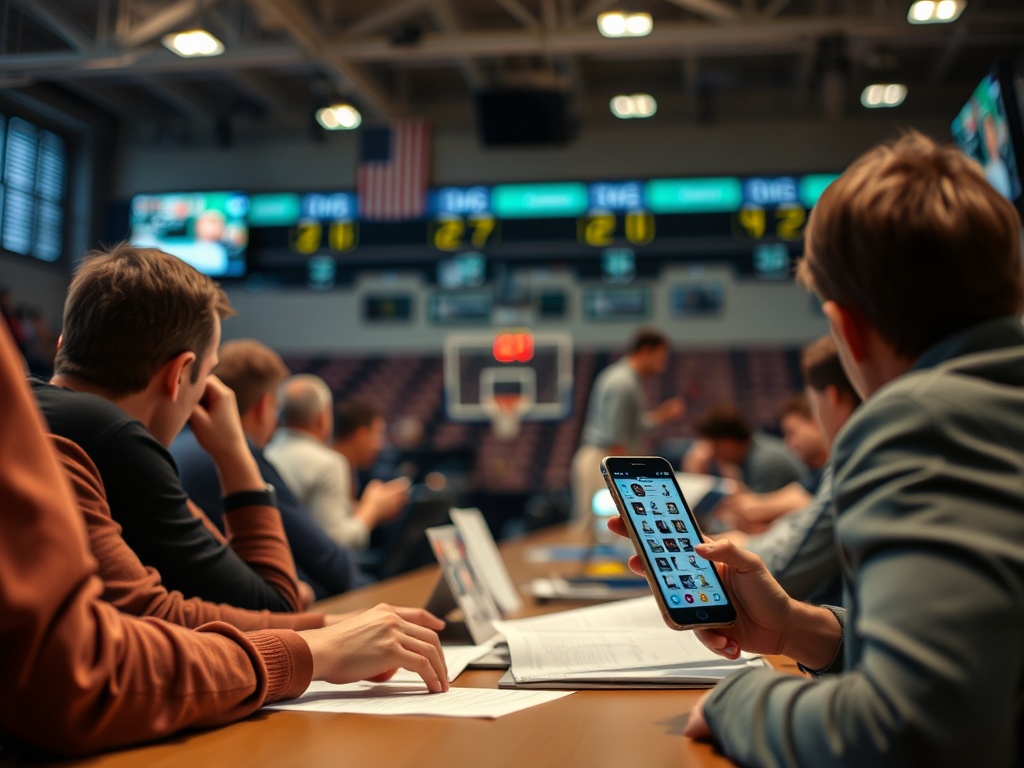
Stakeholders: Who Owns, Uses, and Pays
A simple comparison framework
| Question | Beginner-friendly focus | What to avoid |
|---|---|---|
| What can be observed? | Look for clear actions such as rights holder, licensee, or royalty terms. | Do not depend on hidden intent or unverified claims. |
| What decision follows? | Choose one practice, buying, communication, or preparation adjustment. | Do not overhaul everything after one session. |
| What confirms progress? | Use a simple follow-up check the same week. | Do not mistake complexity for accuracy. |
The table is intentionally modest. At this stage, a small repeatable framework beats a sophisticated model that nobody understands. The same principle applies across sports skills, youth development, fan planning, and sports business topics.
For another perspective, IOC licensing programme can help readers distinguish official language from casual advice, especially when rules, health, equipment, rights, or data interpretation are involved.
Where Licensing Creates Opportunity and Risk
One common mistake is treating a single moment as a complete pattern. A bad possession, poor drill round, awkward equipment trial, or stressful gate delay can teach something, but it should not become the whole story.
Another mistake is copying advanced systems too early. Elite teams and professional venues have staff, technology, and routines that beginners may not need. A scaled-down version is often more useful than a perfect-looking version that nobody maintains.
A third mistake is using information to label people. Sports learning works better when feedback points to controllable behaviors: spacing, timing, preparation, recovery, communication, and decision quality.
A useful safeguard is to write the phrase “this may suggest” before any interpretation. That phrase reminds everyone that the observation is not the same as proof. It also leaves room for coaching judgment, athlete feedback, and situational context.
Career Skills Behind the Scenes
The next step is to convert the topic into questions. What did we observe? What might explain it? What can the athlete, coach, fan, or operator control? What will we check next time? Those four questions keep the process practical and fair.
For example, someone reading this guide may also benefit from How Computer Vision Is Used for Technique Analysis and Player Tracking, because it connects the same decision-making habit to a different part of the sports experience.
The best questions use plain language. Instead of asking whether a player is good or bad, ask whether the player is seeing the cue early. Instead of asking whether a product is premium, ask whether it supports the next skill. Instead of asking whether a fan is prepared, ask what could delay entry.
Licensing Turns Attention Into Usable Rights
A steady habit is better than a dramatic one. Track a short list, review it at the same time each week, and remove anything that does not change behavior. This keeps the article’s advice independent of any brand, app, or single sport.
A final useful cross-check is How to Use Stats Without Letting the Spreadsheet Coach the Team, which gives readers another route into the same broader Games and Sports learning path.
Field notes for role licensing sports merchandise media
Use these field notes as a final quality check before applying the advice. The aim is not to collect more information for its own sake. The aim is to keep the topic tied to a real behavior, a real decision, or a real preparation step that can be reviewed after the next session or event.
Start with the easiest observation in the set: rights holder. If that detail is not clear, the more advanced details will be shaky as well. A beginner-friendly system should make the first observation obvious enough that two reasonable people would usually record it the same way.
Then add one context clue, such as fatigue, role, skill level, venue pressure, equipment fit, or the quality of the opponent. Context does not excuse poor execution, but it explains why the same outcome can mean different things in different settings. That distinction keeps analysis fair.
Finally, decide who needs the information. A player may need one cue, a parent may need one logistics reminder, a coach may need one practice adjustment, and a fan may need one venue check. When the audience is clear, the advice becomes easier to use and easier to remember.
Review the topic again after a short trial period. If the advice helped, keep it simple and repeat it. If it created confusion, reduce the number of moving parts. Good sports learning is usually built from small, honest feedback loops rather than one dramatic change, especially for newer participants.
When studying a sports product or broadcast, ask who owns the mark, who was granted permission, and how the deal protects both revenue and fan trust.