Indoor Houseplants | Best Practices | Informational | Intermediate | Top of Funnel
If your goal is measurably cleaner indoor air, ordinary houseplants should not be treated as air-cleaning equipment. Laboratory studies have shown that plants can remove some volatile compounds in sealed chambers, but current EPA guidance says there is no evidence that a reasonable number of houseplants removes significant quantities of pollutants in real homes and offices.
The best houseplants for an "air-purifying" goal are therefore healthy plants you can maintain for greenery and well-being while you use source control, ventilation, and appropriate filtration for actual indoor-air management.
TL;DR
- Choose plants for light, watering tolerance, available space, and household safety, not unsupported purification rankings.
- Use source control and ventilation first when dealing with indoor pollutants; consider filtration appropriate to the pollutant and room.
- Avoid chronic overwatering because persistently damp potting media can support microorganisms.
- Treat famous sealed-chamber plant studies as interesting research, not a direct recipe for home air cleaning.
Why the air-purifying label is misleading
The popular claim traces in part to controlled research such as the NASA Interior Landscape Plants for Indoor Air Pollution Abatement work, where certain plants and associated media removed volatile organic compounds under experimental conditions. Those experiments were useful for understanding mechanisms, but a sealed test chamber is not a typical bedroom or living room with ongoing pollutant sources and air exchange.
A later peer-reviewed analysis in the Journal of Exposure Science & Environmental Epidemiology reviewed chamber studies and concluded that the air-cleaning rates from potted plants are too small to meaningfully improve indoor air quality under normal building ventilation. The issue is not that plants do nothing chemically; it is that the real-room scale and air-exchange conditions are very different.
The EPA currently states that there is no evidence a reasonable number of houseplants removes significant quantities of pollutants in homes and offices. That is the most practical takeaway for homeowners deciding how to spend money on air quality.
What actually improves indoor air
Start with source control. Reduce or remove the pollutant source when possible, such as smoking indoors, high-emitting products, moisture problems, or improperly vented combustion. Then use outdoor-air ventilation when conditions and building systems allow. Filtration or air cleaning can complement those steps for specific pollutants.
The right action depends on the problem. Particle filtration is different from gas or odor control, and neither solves radon, carbon monoxide, or moisture at the source. If symptoms or a serious contamination issue is present, seek appropriate professional or public-health guidance instead of adding plants as a treatment.
Plants can still make a room more pleasant and visually connected to nature. That benefit is legitimate without attaching an exaggerated pollution-removal claim to the pot.
A practical plant shortlist for real homes
Snake plant: a useful choice for people who need a plant that tolerates relatively low light and infrequent watering. It has a strong upright form and small floor footprint. Let the potting mix dry appropriately for the species rather than watering on a fixed calendar.
Pothos: a flexible trailing plant for shelves or hanging positions with bright indirect to moderate light. It is often forgiving of imperfect routines, but long vines need occasional pruning and support. Avoid letting pots sit in standing water.
Spider plant: a good fit for bright indirect light and households that enjoy propagating plantlets. Its arching foliage takes more lateral space than an upright plant, so place it where leaves will not be constantly brushed or crushed.
Peace lily: visually striking with broad foliage and white spathes, but it generally needs more consistent moisture and attention than the toughest low-care options. It should not be chosen simply because it appears high on an old "air-purifying" list.
Dracaena: useful where an upright cane form suits the room, with many cultivars available. Match the cultivar to light and space, and avoid chronic soggy soil.
Choose the plant by conditions, not mythology
Assess light first. Stand where the plant will live at several times of day and note direct sun, bright indirect light, or low-light conditions. Window direction, exterior shade, season, and distance from glass all matter. A plant surviving in low light is not the same as a plant thriving there.
Next, assess care behavior. If you tend to forget watering, choose a species that tolerates drying. If you enjoy checking soil frequently, a plant with steadier moisture needs may be realistic. Good horticulture is a better selection filter than a purification score.
Finally, consider pets, children, and placement. Some common houseplants can be irritating or toxic if chewed. Check a reputable veterinary or poison-control resource for the exact species before bringing it into a household where ingestion is plausible.
Do not create an indoor moisture problem
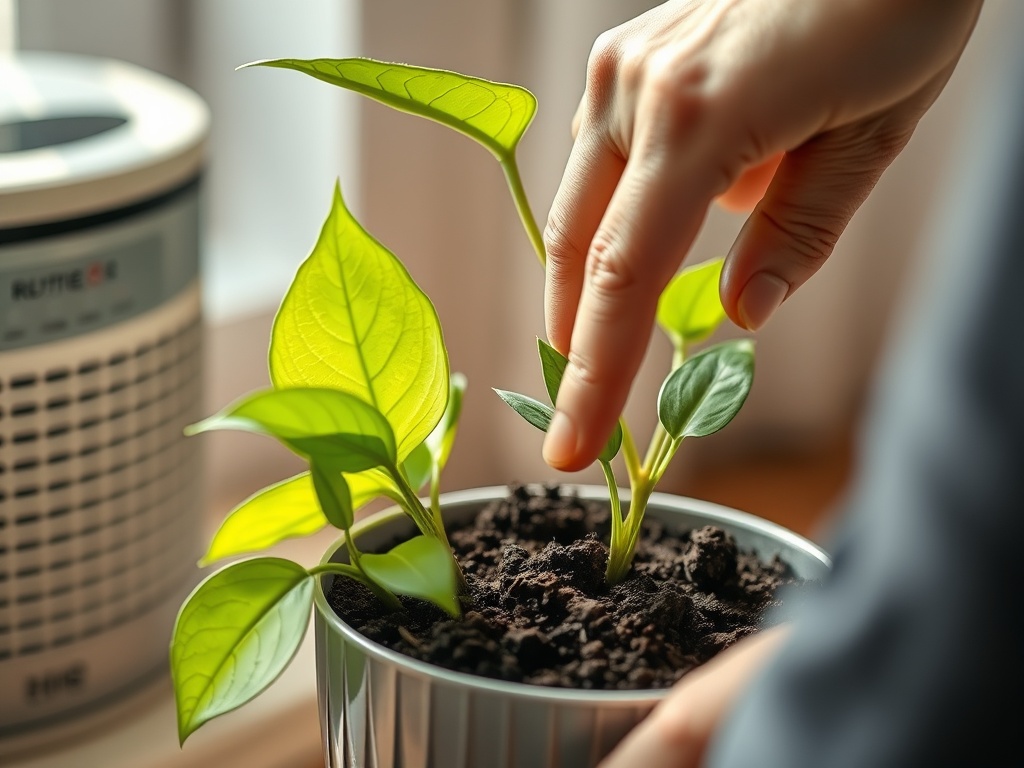
Plant roots need water, but the potting mix also needs air. Constantly saturated media can stress roots and create conditions favorable to fungus gnats, molds, or other microorganisms. EPA specifically cautions against overwatering houseplants because overly damp soil may promote microorganisms that can affect allergic individuals.
Use a pot with appropriate drainage for the species and container setup. Empty cachepots or saucers after excess water drains unless the plant's care method specifically calls for another approach. Improve the watering decision by checking the media rather than following an inflexible weekly schedule.
If many plants are grouped in a small room, monitor humidity and condensation. Plant transpiration may contribute moisture, but the overall effect depends on plant number, ventilation, room size, and climate. Do not use a houseplant collection as a humidity-control device.
Style plants without making the room harder to use
Use plant height and growth habit to fill a specific visual role. An upright floor plant can soften a corner, a trailing plant can activate a high shelf, and a compact rosette can add life to a desk. Leave enough clear surface area that watering and cleaning remain easy.
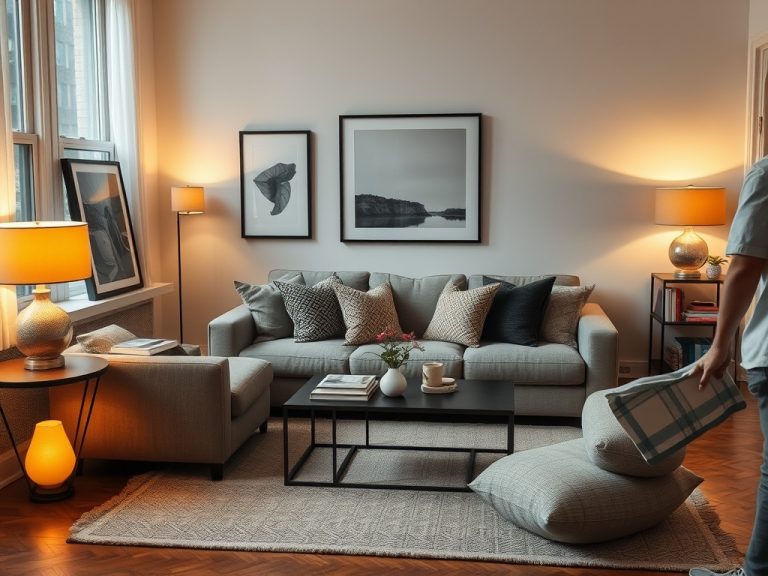
The principles in maintaining a clutter-free living room apply directly: every pot should have a defined home, and plant-care tools should not permanently spread across surfaces. If you want more character in a temporary home, renter-friendly personalization shows how portable plants can work with lighting, textiles, and art instead of becoming the only decorative strategy.
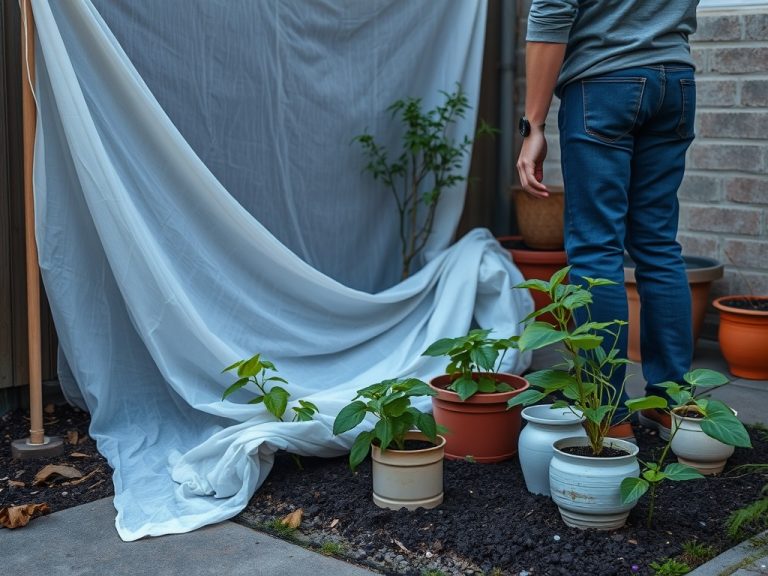
If gardening interests are expanding beyond houseplants, growing garlic, onions, and shallots at home is a different horticultural path that depends on outdoor light, seasonal timing, and local conditions rather than indoor decor.
When an air cleaner is the better purchase
If the objective is particle reduction, compare air cleaners by room-size suitability, airflow, filter efficiency, noise, filter cost, and the pollutant you are trying to address. For gases or odors, evaluate technology designed for those contaminants. Avoid devices that intentionally produce ozone in occupied spaces.
For serious indoor-air concerns, identify the source first. A purifier placed next to an ongoing leak, combustion problem, or high-emitting activity can become a distraction from the underlying cause. Plants are even less suited to that role because their pollutant-removal rate is not comparable to building ventilation or engineered filtration in typical homes.
The most evidence-aligned approach is simple: keep houseplants because you like growing them, and manage indoor air with methods designed and evaluated for indoor air.
Keep the plants, lose the purification promise
Houseplants can add color, routine, texture, and the satisfaction of caring for something living. Those are enough reasons to grow them. They do not need an exaggerated claim to justify their place in a home.
Choose one or two species that fit your actual light and watering habits, then address air-quality concerns through source control, ventilation, and appropriate filtration. That separates good plant care from good indoor-air management while allowing both to succeed.
General information note: Indoor-air and plant-care information is general and educational. For significant pollution, mold, combustion, allergy, or health concerns, use appropriate public-health guidance and qualified professionals; select plants according to species-specific care and household safety needs.