Seasonal Home & Garden Care | Best Practices | Informational | Intermediate | Top of Funnel
Tender outdoor plants are most likely to come through a cold snap when protection is matched to the plant, the expected low temperature, exposure time, wind, soil moisture, and the microclimate around the planting. The practical sequence is to identify what is vulnerable, prepare before temperatures fall, cover or relocate selectively, and remove or adjust protection after conditions moderate.
Hardiness-zone labels are useful background, but they do not predict every freeze. Short extreme events, warm spells followed by sharp cold, and exposed garden pockets can create risks that a broad zone number cannot capture.
TL;DR
- Check the forecast low, duration, wind, and frost or freeze advisories, then rank plants by vulnerability.
- Move containers to shelter when practical and protect roots as well as foliage.
- Use breathable covers that reach the ground; keep plastic from resting directly on foliage when possible.
- Remove or vent protection after the cold event so plants do not overheat or stay excessively damp.
Understand what a hardiness zone can and cannot tell you
The USDA Plant Hardiness Zone Map is based on the average annual extreme minimum winter temperature using 1991-2020 data. USDA also describes the map as a general guide, not a record of the coldest temperature that has ever occurred or a guarantee against future extremes.
That distinction matters for tender plants. A perennial rated near the cold edge of your zone may survive normal winters and still be damaged by a rare cold snap. Containers are also more exposed than in-ground roots because the pot can lose heat from all sides. Newly planted specimens, actively growing tissue, and plants pushed into tender growth by recent warmth may also respond differently from fully dormant plants.
Walk the yard and note microclimates. Low spots can collect cold air, exposed balconies can add wind stress, and a sheltered wall may stay somewhat warmer. Protect the actual plant in its actual location rather than applying one rule to the entire property.
Make a vulnerability list before the temperature drops
Prioritize tropicals, tender perennials, newly planted material, container plants, flowering or fruiting plants at a sensitive stage, and anything already stressed. Check reliable species-specific guidance when the plant is valuable or unfamiliar. A generic temperature threshold is not safe for every species.
Gather frost cloth, old sheets or lightweight blankets, stakes, clips, mulch, and a watering can or hose if soil moisture needs attention. Avoid using materials so heavy that they crush stems. If a covering will sit near outdoor lighting, heaters, or electrical equipment, maintain safe clearances and follow product instructions.
Prepare storage space indoors, in a garage, or in another protected location for containers that can be moved. Clear the route first. If seasonal supplies have spread into living areas, the methods in the clutter-free living-room guide can help keep temporary garden gear from becoming permanent indoor overflow.
Water selectively and protect the root zone
Cold-stress advice often includes entering a freeze with appropriately moist, not waterlogged, soil because very dry roots can be more vulnerable and moist soil can store heat. This is context-dependent. Do not irrigate automatically if the soil is already wet, drainage is poor, or local extension guidance recommends otherwise for the plant and conditions.
Add or refresh mulch over the root zone without piling it directly against trunks or crowns that should remain exposed. Mulch can moderate soil temperature swings, but it does not turn a tender plant into a cold-hardy one. For containers, grouping pots in a sheltered location can reduce exposure, and insulating the outside of the pot may help protect roots.
If a pot can be moved, relocation is often more controllable than building elaborate protection around it. A cool sheltered space may be preferable to a heated living room for plants that need to remain dormant. Match the temporary location to the plant's light and temperature needs.
Cover plants before heat has escaped
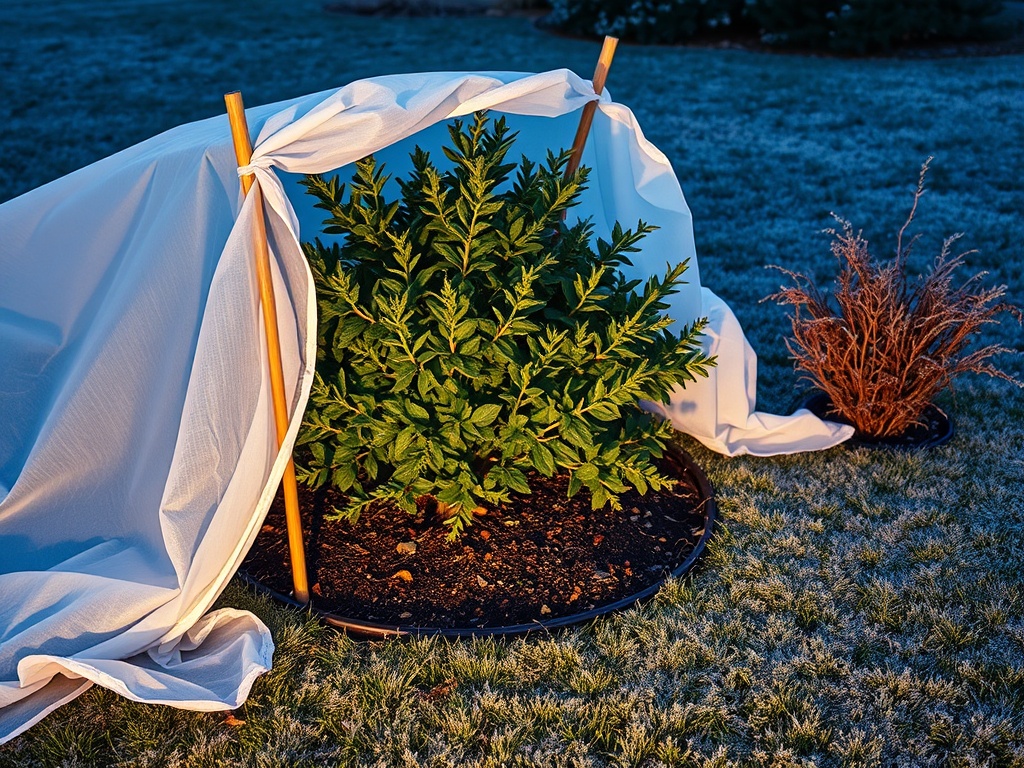
Install covers before temperatures reach their overnight minimum. Support fabric with stakes when delicate foliage would be damaged by weight, and drape the cover to the ground so it can trap some heat released from the soil. Secure the edges against wind without sealing plants into an airtight package.
Lightweight frost cloth is designed for plant protection, while sheets and blankets can work for short events if they stay dry enough to handle and do not become dangerously heavy. Plastic can block wind and precipitation but may transfer cold where it touches foliage and can overheat rapidly in sun. If used as an outer weather layer, keep it supported away from leaves and remove or vent it promptly.
The Mississippi State University Extension guidance on protecting plants from cold temperatures emphasizes that plant response varies with species and with the speed and extent of temperature change. Use local extension advice to refine material choice and timing for your climate.
Handle larger shrubs and in-ground plants strategically
For a tender shrub, covering the entire canopy may be practical for one or two nights, but wrapping only the top and leaving the bottom open loses much of the benefit of trapping ground heat. Where possible, bring the cover down to soil level and secure it so wind cannot lift it.
Do not rely on outdoor incandescent lights, heaters, or other heat sources unless they are specifically rated and installed for that use. Fire and electrical risk can outweigh the horticultural benefit. Extension recommendations that mention supplemental heat should be followed exactly and adapted to current product safety requirements.
What to do the morning after
Once temperatures rise safely, uncover or vent plants so solar heat and humidity do not build under the material. If another cold night is forecast, dry and reinstall the cover later rather than leaving it sealed all day. Check container soil because protected pots can dry at a different rate from exposed ones.
Do not prune damaged foliage immediately just because it looks unattractive. Brown leaves can reveal the extent of damage, and waiting until the risk of additional freezes passes often makes it easier to see what tissue is truly dead. Species and climate matter, so use local pruning guidance for valuable plants.
Avoid heavy fertilization immediately after cold injury. Pushing new tender growth can be counterproductive if cold weather is not finished. Focus first on stable moisture, drainage, and protection from additional extremes.
Store protection so the next cold snap is easier
Dry fabric covers before folding them to reduce mildew and odor. Store clips, stakes, and labels with the cover rather than in separate corners of the house. If garden textiles share indoor storage with household linens, keep the dirty outdoor materials physically separated. The system in the linen-closet organization guide can inspire category zones, but garden covers usually belong in a utility area rather than with bedding.
If you rent and need attractive temporary storage for balcony or patio supplies, ideas from personalizing a rental can help you choose portable containers or screens that do not require permanent construction.
After the event, record which plants needed help and which microclimates performed better. That small garden log becomes more useful than a generic rule because it captures the conditions of your own site.
Build a cold-snap plan before the alert arrives
The strongest protection plan is selective. Know which plants are genuinely tender, keep appropriate covers clean and accessible, and decide in advance which containers will move and where they will go.
Before the next cold event, identify your three most vulnerable plants and prepare their materials first. Then use the local forecast and extension guidance to decide how much additional protection is justified.
General information note: Cold-protection guidance is general and educational. Plant tolerance, weather, irrigation needs, and safe use of covers or electrical equipment vary by species and location; consult local extension resources and product instructions for site-specific decisions.