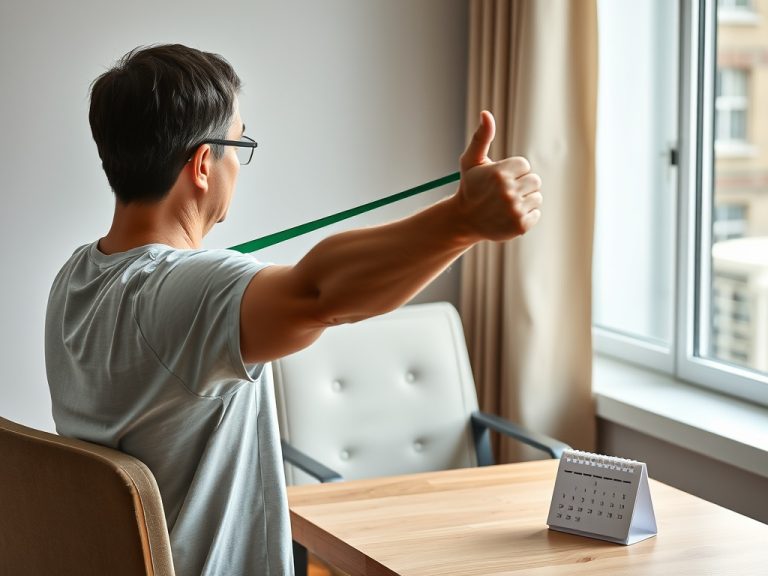
The best home cardio tools are the ones that match your space, flooring, noise limits, joint tolerance, and preferred type of movement. For most people, an adjustable rope, a stable non-slip mat, and one low-impact option provide more useful variety than a room full of specialized equipment.
TL;DR: Choose rope length and cable type for your skill, use a mat designed for the activity rather than a thick unstable cushion, and consider steps, sliders, bands, or a compact pedal device when impact or noise is a concern. Test the workout pattern before buying an expensive tool.
Start With the Room, Not the Product Page
Measure ceiling height, clear floor area, and the distance from fragile objects. A jump rope needs space above, beside, and behind you. Step work needs a stable surface. Sliders need compatible flooring. Fast footwork can create noise that matters in apartments.
Check the floor itself. Concrete can feel harsh for repeated jumping; deep carpet can catch equipment and reduce stability. A mat can protect flooring and reduce noise, but a very soft mat may make quick movement less stable.
Also identify storage and setup time. A tool that must be assembled or moved from a closet for every ten-minute session may add more friction than value. The CDC's barrier guidance specifically includes low-equipment choices such as walking, stair climbing, jumping rope, and bodyweight exercise as practical options.
Choose a Rope by Feedback and Control
Beaded ropes provide more feedback because the rope has shape and makes contact with the floor; many beginners find the rhythm easier to learn. PVC ropes are versatile and relatively light. Thin speed cables turn quickly but can be less forgiving, sting when missed, and may suit experienced users better than first-time jumpers. Weighted ropes increase demand but are not automatically better for cardio or technique.
Length matters. A rope that is too short catches the feet; one that is too long slaps the floor and forces inefficient arm movement. An ACE jump-rope guide suggests standing on the middle and checking where the handles rise, while also advising gradual progression for people new to impact. Adjustable ropes are useful when you are still learning the preferred length.
Handles should turn smoothly and feel secure without demanding a crushing grip. Avoid sharp cable edges in shared spaces, and inspect the rope for wear. If you have joint pain, pelvic-floor symptoms, balance limitations, or a condition affected by impact, choose a low-impact option or seek professional guidance.
Match the Mat to the Movement
Yoga mats prioritize grip and floor comfort for slower positions. Thick foam exercise mats can be comfortable for floor work but may be unstable for jumping or fast lateral steps. Dense equipment mats protect flooring under machines and can reduce vibration, but they are not automatically designed for dynamic footwork.
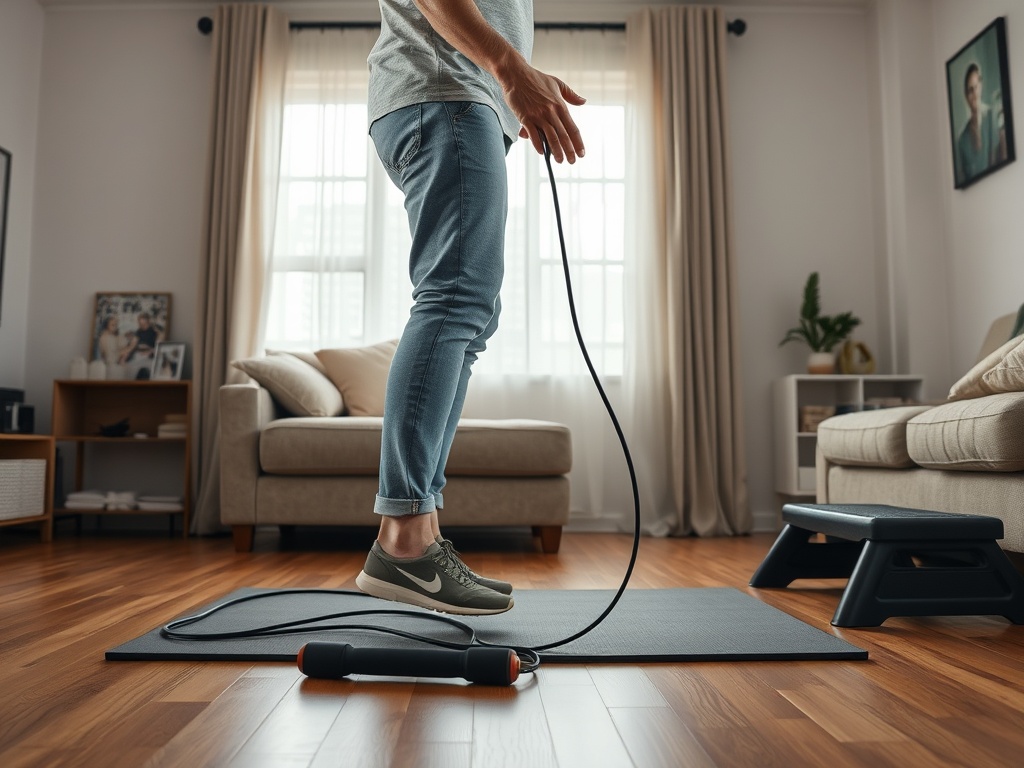
For jump rope or cardio circuits, look for a flat, non-slip surface that does not bunch, curl, or slide. The mat must be large enough for the movement pattern and compatible with the rope; some soft surfaces slow or damage certain cables. Follow the manufacturer's use instructions even when the product looks simple.
Clean the mat according to its material and let it dry fully. Replace it if tears, compressed spots, or curled edges create a trip hazard.
Compare Simple Tools Before Buying
| Tool | Best Use | Main Advantage | Main Limitation |
|---|---|---|---|
| Adjustable beaded or PVC rope | Rhythmic moderate-to-vigorous cardio | Portable and skill-based | Impact, ceiling, and noise requirements |
| Stable exercise mat | Floor circuits and movement comfort | Protects floor and defines space | Wrong thickness can reduce stability |
| Aerobic step | Step-ups and choreographed cardio | Easy to vary pace and pattern | Requires stable setup and knee tolerance |
| Sliders | Low-space conditioning and trunk work | Compact and inexpensive | Flooring compatibility and technique demand |
| Resistance bands | Mixed strength-cardio circuits | Versatile and portable | Bands wear and do not replace every load option |
| Compact pedal device | Seated low-impact movement | Accessible in small spaces | Limited full-body challenge and variable quality |
No tool is universally best. The right choice is the one that removes a barrier without creating a new safety or storage problem.
Test the Workout With Household Alternatives
Before buying, test the movement pattern. Practice rope-free skipping to see how impact feels and whether the space works. Use a bottom stair for controlled step-ups if it is safe and has a rail. Try a towel as a slider only on a compatible clear floor and only for slow, controlled practice.
Household substitutions have limits. Chairs can move, improvised platforms can tip, and socks on smooth floors can cause falls. Do not use unstable furniture as exercise equipment. If the safe alternative is not obvious, skip the experiment.
If variety is the main goal, first build a cardio plan for people who get bored easily. A rotation of walking, dance, stairs, rope-free movement, and short circuits may show which tool would actually be used.
Build a Quiet, Joint-Aware Cardio Circuit
A low-impact circuit can alternate marching, controlled step-ups, side steps, shadow rope, and light resistance-band movements. Keep transitions clear and the floor uncluttered. Use work periods that allow technique to remain stable, with enough recovery to repeat the pattern.
For higher-impact rope work, begin with small jumps, soft landings, and short bouts. Stop before fatigue changes the landing pattern. Add total jumps or time gradually rather than starting with complicated skills.
Do not choose an exercise because a device reports the highest calorie number. Device estimates vary, and energy expenditure is only one benefit. Coordination, enjoyment, aerobic capacity, and the likelihood of repeating the session matter.
Avoid Product Claims That Exceed the Evidence
A mat cannot target belly fat, and a weighted rope does not guarantee faster fat loss. Equipment can make activity more convenient or engaging, but body composition reflects the broader pattern. Read the truth about spot reduction before paying extra for a tool marketed around one body area.
Be skeptical of “medical-grade,” “detox,” posture-correcting, or joint-saving claims that lack clear definitions and evidence. Cushioning can change comfort but does not make every movement appropriate for every injury. Reviews can identify common durability issues, yet they cannot establish personal suitability.
When motivation is low after a disruption, buying new equipment may create a temporary lift without solving the return plan. Use the staged approach in rebuilding motivation after an injury or setback before assuming another tool is the missing ingredient.
Use a Purchase Checklist
Confirm the tool's dimensions, user-weight limit when relevant, warranty, return policy, replacement parts, floor compatibility, noise, and storage. Look for clear instructions and avoid products with unstable bases, damaged cords, exposed metal, or strong chemical odor that does not dissipate.
For a rope, check adjustment method and replacement cable availability. For a mat, check density, thickness, surface grip, and whether shoes are allowed. For steps and pedal devices, check non-slip feet and movement under moderate use.
Set a usage test: name two specific weekly sessions and the exact place the tool will be stored. If you cannot identify both, postpone the purchase and continue with no-equipment options.
Buy for Use, Not for Storage
Start with one tool that supports an already-planned session. Clear the space, perform a short technique practice, and keep the first week conservative. Add another item only when the limitation is clear, such as needing a quieter or lower-impact option.
The best home setup is not the largest collection. It is a safe, accessible corner that makes useful movement easier to begin. Choose the tool by the workout you will repeat, not by the most dramatic product promise.